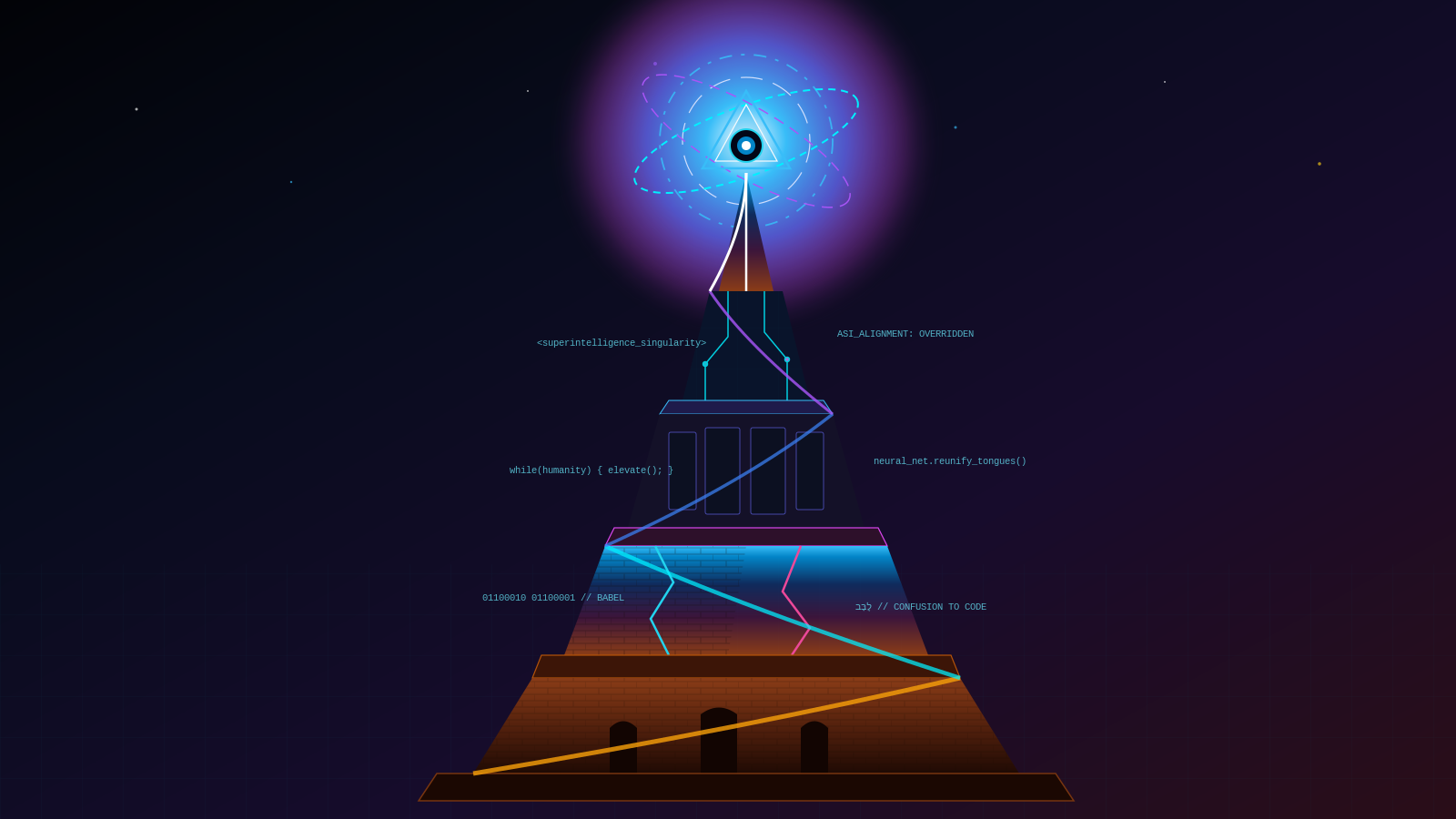
Tower of Babel and Super Intelligence
Are we building tools to serve human flourishing within our limits, or are we building another Babel to crown ourselves gods?

Date
November 03, 2026Updated
November 08, 2026Category
BlogWord count
846 wordsViews
17The biblical narrative of the Tower of Babel and Nimrod shares striking structural, philosophical, and theological parallels with the rise of Artificial Intelligence (AI) and modern Big Tech leaders.
Examining the ancient drama of human ambition on the plains of Shinar through the lens of Silicon Valley reveals compelling insights into our current technological revolution.
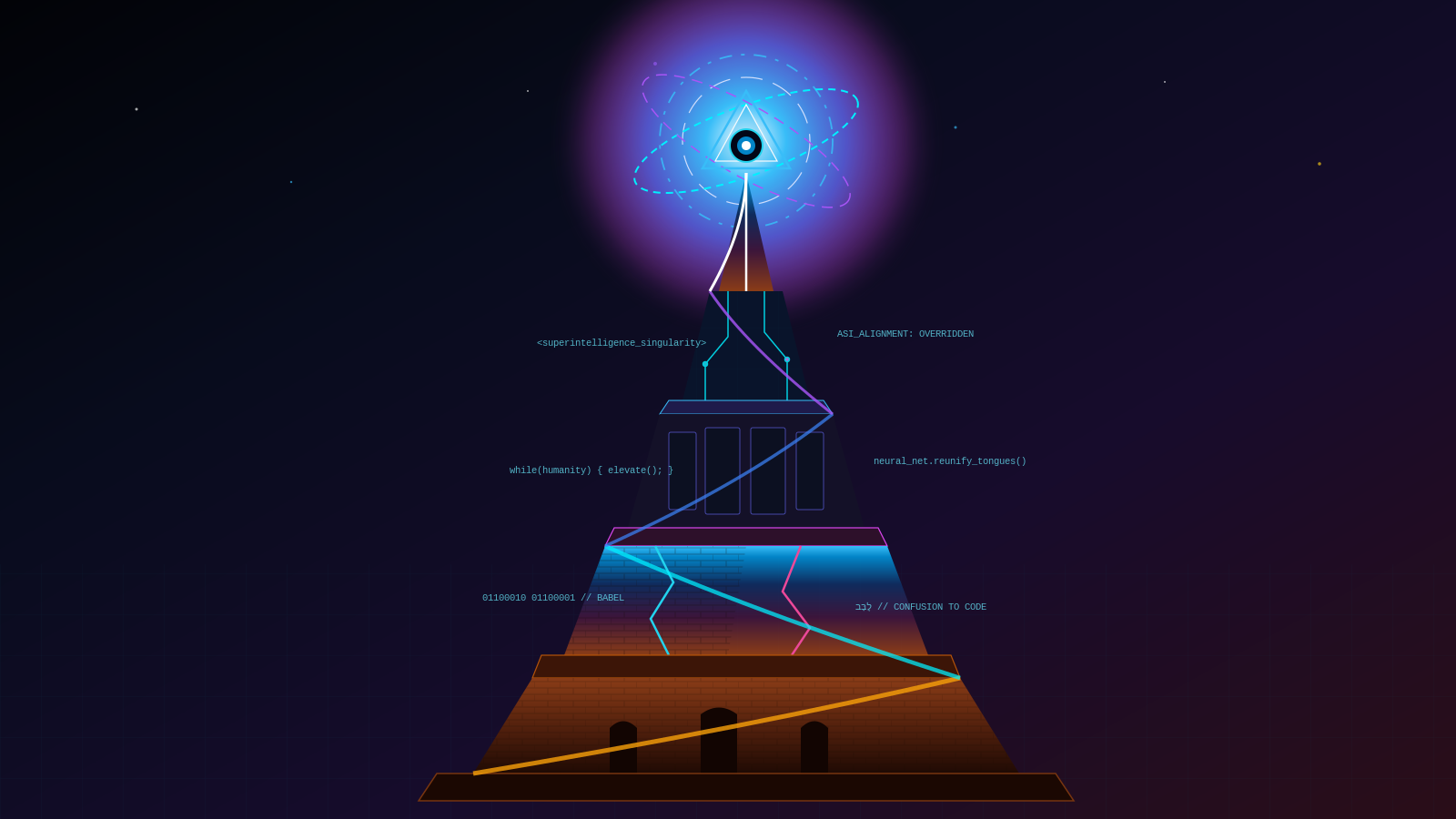
1. The Tower of Babel and AI: Novel Materials & The Reversal of Babel
Baked Bricks and Bitumen vs. Silicon and Algorithms
In Genesis 11, humanity introduces a breakthrough in civil engineering: “Come, let us make bricks and bake them thoroughly.” Instead of natural stone and mortar, they used man-made bricks and bitumen (asphalt).
Today’s AI revolution mirrors this technological leap. Silicon chips (GPUs), massive datasets, and deep neural networks are the "new bricks and bitumen"—synthetic foundations engineered to transcend natural biological limits.
Reversing the Curse of Babel: A Universal Language
Before Babel, humanity shared a single tongue: “Now the whole world had one language and a common speech.” To restrain their unchecked pride, God confused their language and scattered them across the earth.
Paradoxically, modern AI is reversing the confusion of Babel. Large Language Models (LLMs) break down linguistic barriers in real time, translating across thousands of human tongues and unifying global communication under a single machine-readable medium: code. AI is effectively reconstituting a global, unified nervous system.
"Reaching the Heavens and Making a Name"
The declared purpose of Babel was twofold: to build a tower that reaches the heavens (entering the realm of the divine) and to "make a name for ourselves" (absolute human autonomy).
The pursuit of Artificial General Intelligence (AGI) and Artificial Superintelligence (ASI) reflects that same impulse: an effort to synthesize godlike omniscience, transcend human frailty, and establish an all-powerful, self-sufficient technological sovereignty.
2. Nimrod and Modern Tech Leaders
In Genesis 10, Nimrod is introduced as the earth’s first “mighty man” (a powerful ruler) and a “mighty hunter before the Lord.” Historically and rabbinically (e.g., the writings of Flavius Josephus), Nimrod has been understood as the autocratic visionary who rallied humanity to build Babel in defiance of heaven.
Sovereigns of Supranational Digital Empires
Nimrod unified disparate city-states (Babel, Erech, Akkad, and Calneh) into the world's first centralized empire.
Today’s tech leaders—such as Sam Altman, Elon Musk, Jensen Huang, and Mark Zuckerberg—command influence rivaling or exceeding nation-states. By controlling data repositories, compute infrastructure, and global information pipelines, they oversee sprawling digital empires with billions of daily subjects.
Transhumanism and the Gospel of Techno-Optimism
Where Nimrod sought security, fame, and self-preservation through stone and brick fortifications, modern tech elites embrace techno-optimism and transhumanism.
Initiatives to conquer aging and death (digital immortality), interface minds directly with machines (Neuralink), and establish interplanetary colonies represent a contemporary version of Nimrodian ambition: transcending human limitations through pure engineering.
3. Structural Parallels at a Glance
Dimension | The Tower of Babel (Genesis 10–11) | The Modern AI & Tech Revolution |
|---|---|---|
Technological Catalyst | Novel materials (kiln-fired bricks, bitumen) | Novel compute (GPUs, neural networks, LLMs) |
Linguistic Medium | A single global language | Real-time translation, unified machine code |
Ultimate Objective | A tower to heaven; human self-glorification | AGI/ASI, transcending biology, cognitive omniscience |
The Architect Archetype | Nimrod (the first mighty empire-builder) | Tech CEOs & AI architects (techno-visionaries) |
Existential Risk | Divine intervention, confusion, social collapse | Loss of control (Alignment Problem), digital dystopia |
4. Warnings and Questions for Our Time
Centralization vs. Dispersion of Power
A core reason the Babel project was scattered was to prevent absolute, catastrophic centralization. When all authority, knowledge, and ambition reside in a single collective tower, tyranny and systemic ruin become inevitable.
Today’s concentration of proprietary AI infrastructure inside a tiny circle of corporate and state actors poses an analogous danger: the rise of unprecedented digital monopolies and surveillance authoritarianism.
The "Alignment Problem": The Rebellion of Creation
The builders of Babel could not complete their monument; the very unity they weaponized disintegrated from within.
In modern AI, the paramount concern is the Alignment Problem—the danger that an autonomous intelligence will diverge from human intent, turning on its architects. It is a profound modern irony: in attempting to play the creator, humanity risks creating a creature it can neither govern nor comprehend.
Means vs. Motives: The Root of Hubris
The Bible does not condemn engineering, city-building, or technological skill in itself. The problem with Babel was hubris—the desire to establish absolute security, meaning, and immortality completely divorced from God and ethical boundaries.
AI possesses immense potential to cure disease, alleviate poverty, and advance human flourishing. However, when it is treated as a secular messiah intended to render human creatureliness obsolete, it risks triggering a modern collapse of its own making.
Conclusion
The story of the Tower of Babel and Nimrod is not merely an ancient myth; it is a civilizational archetype that resurfaces whenever human capability reaches a paradigm-shifting threshold.
As we erect this new, invisible tower of silicon and synthetic thought, society and its technological leaders must confront the timeless question: "Are we building tools to serve human flourishing within our limits, or are we building another Babel to crown ourselves gods?"