Ideas in motion
From idea to interactive app — in minutes.
Build and validate models, scale to production with Jupyter, and share your tools with a community of builders.
Welcome Back
Please sign in to continue.
Don't have an account?
or
By continuing, you agree to our Terms of Service and Privacy Policy.
Create & Share
Build an app and post it instantly
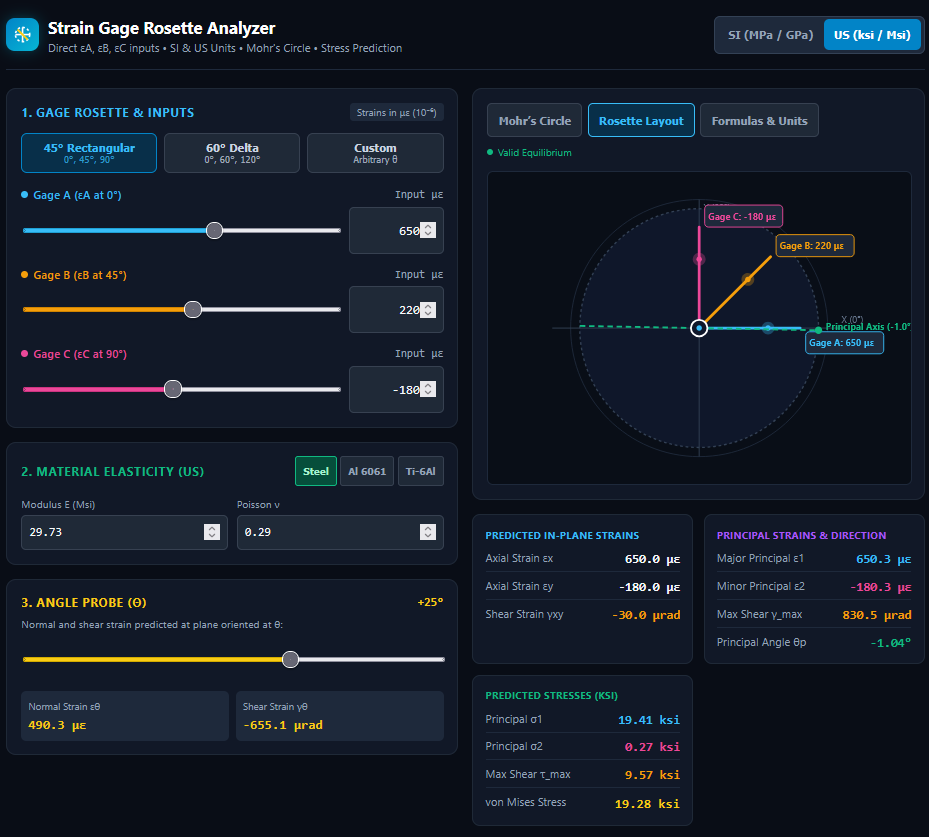
Create interactive apps — visual UI documents, Custom React sandboxes, live Calc models — and publish with one click. Your post is immediately shareable with a cover, tags, and a project, and embeddable in other posts.
Modernize Legacy
Give legacy Excel spreadsheets a UI and learning documents
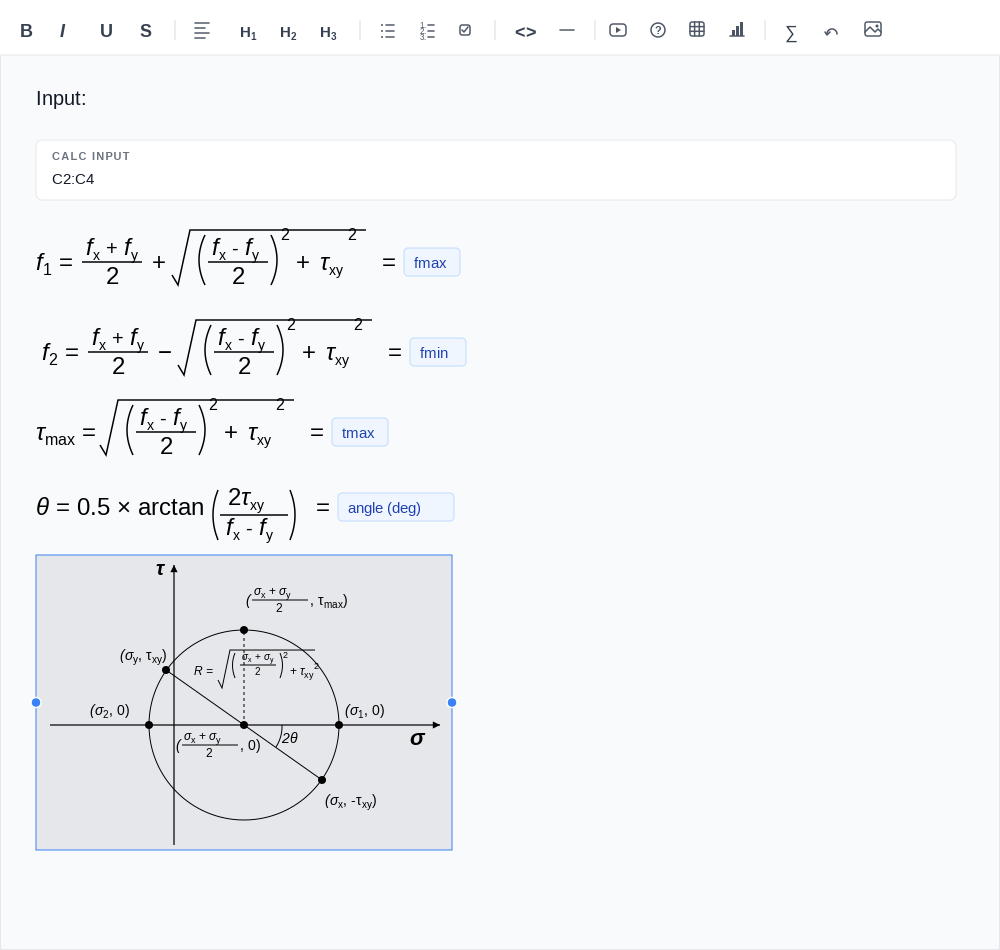
Import your existing Excel spreadsheets with formulas intact, wrap them in a friendly visual UI, and attach the learning documents that explain them. Decades of spreadsheet knowledge become modern, interactive apps.
Prompt Editor
Write AI prompts and share them as posts
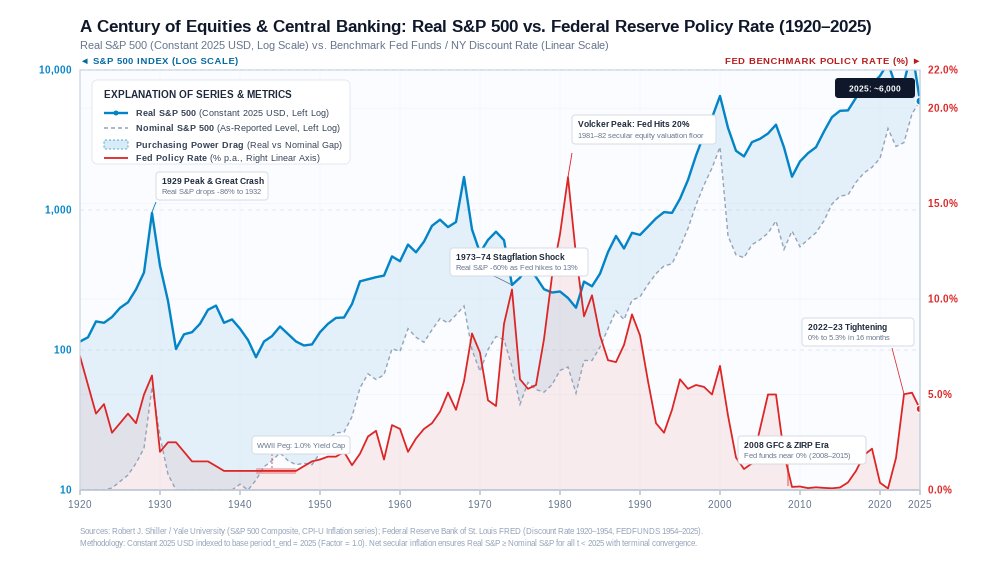
Create reusable system and object-specific AI prompts in the prompt editor, then publish them as public posts others can discover and reuse.
Review & Validate
Validate created apps against references and learning documents
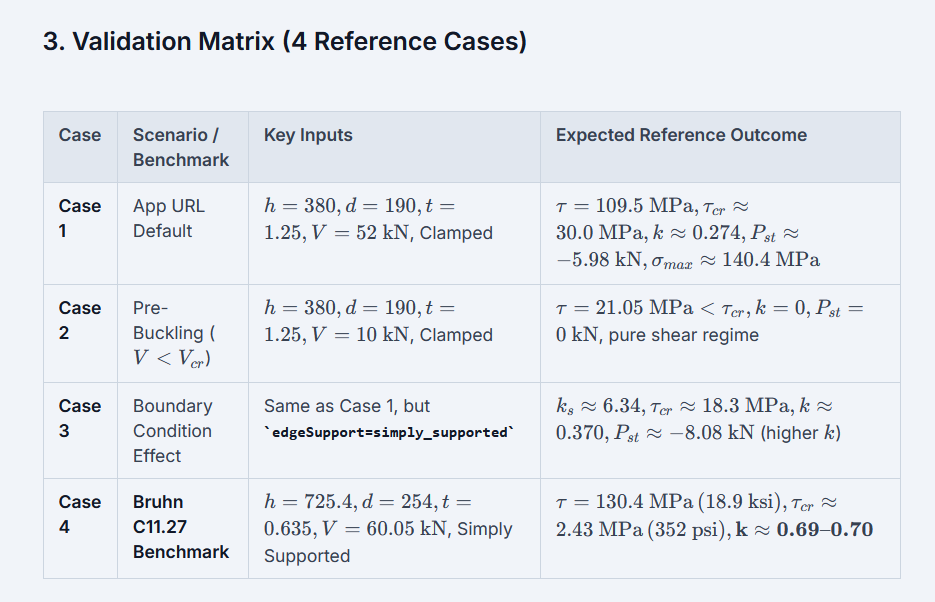
Write Review posts that check an app against textbook references and known examples. Documented reference cases build trust: validated apps earn a ribbon badge and rank higher in every list.
Batteries Included
All utilities, built in
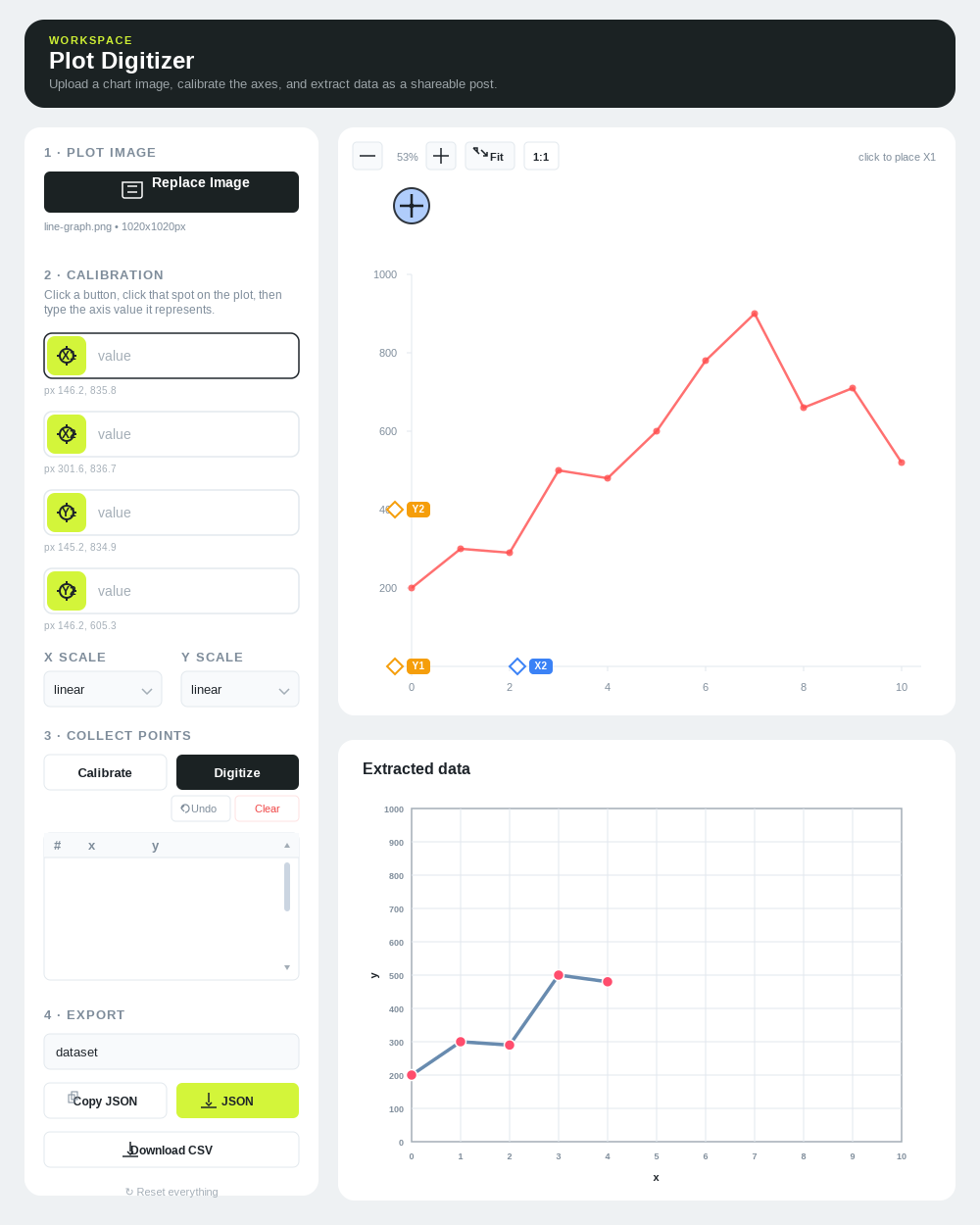
Calc spreadsheets, visual UI, Custom sandboxes, Draw diagrams, Graphs, CAD and FEM analysis, digitizer, data parsing, quizzes and surveys, prompt templates, projects, and review validation — one platform covers the entire journey from legacy data to validated production tools.
Scale to Production
Integrate with Jupyter for real analysis and design
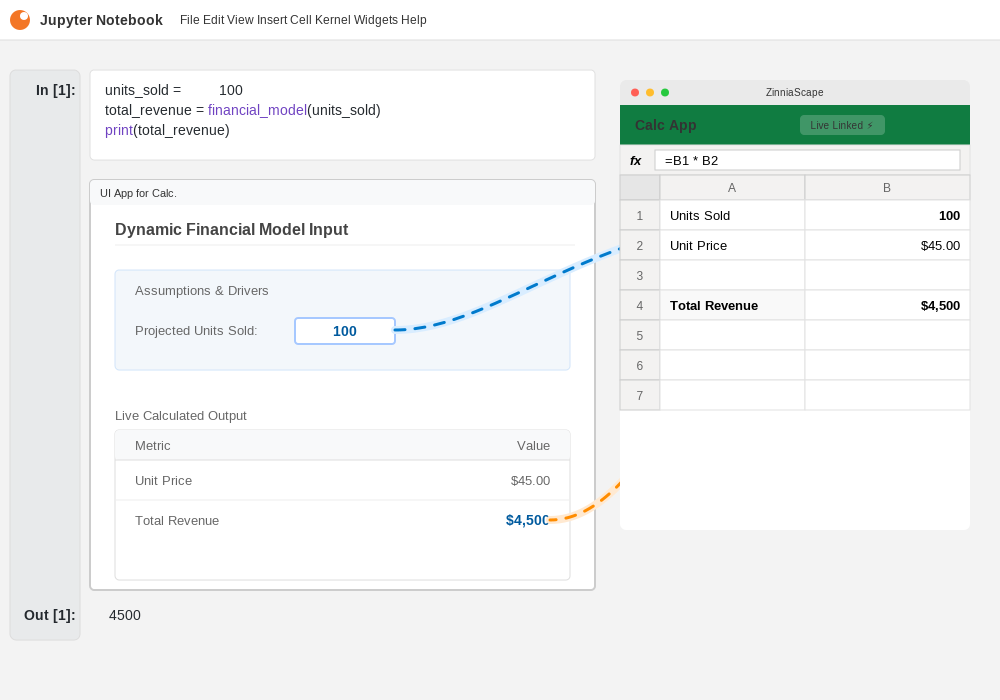
Every app has a Python API through the zinniascape module. Copy the snippet, run the app from a Jupyter or Colab notebook, pass inputs, and read outputs back — scaling a shared app into production-grade analysis and design pipelines.
Drag & Drop
Bring apps into your notebook
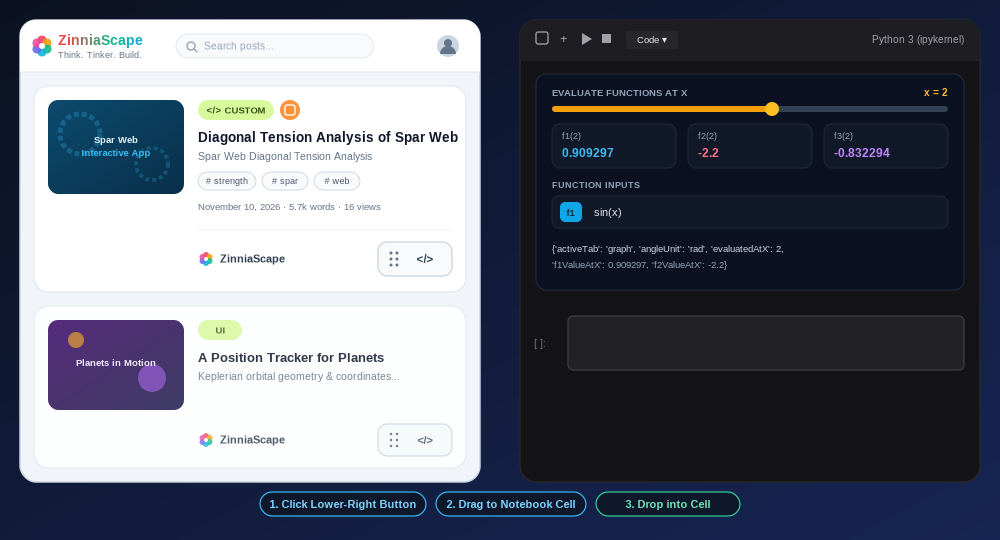
Bring ideas straight from your screen into your notebook. Drag a Calc, Custom, or UI post into a Jupyter cell to insert its Python starter API code.
All the utilities, included
An integrated suite covering the whole journey — from legacy data to validated, production-scale apps.
- Calc Spreadsheet Engine
- Turn legacy Excel spreadsheets into live, computable models with formulas intact.
- Visual UI Builder
- Wrap calculations and apps in friendly UI documents — no frontend code required.
- Custom App
- Write or generate single-file React apps that run in a secure sandbox with URL inputs and reported outputs.
- Draw Diagrams
- Interactive engineering diagrams driven by equations and linked Calc inputs.
- Graphs & Charts
- Declarative Vega-Lite charts bound to live parameters.
- CAD & FEM Analysis
- Cross-sections, frame solving, and fastener joints with linkable parameters and outputs.
- Document Digitizer
- Digitize physical documents and legacy formats into searchable, computable data.
- Legacy Data Parsing
- Structure unstructured legacy data with regular expressions and mapping tools.
- Quizzes & Surveys
- Anonymous surveys and quizzes embedded right in your documents.
- Prompt Templates
- Reusable system and object-specific AI prompts shared as public documents.
- Review & Validation
- Review posts validate apps against reference cases — validated apps earn a badge and rank higher.
- Projects & Sharing
- Organize posts into projects, invite subscribers, and share instantly with a link.

UI
A Position Tracker for Planets in Motion
UI
11/01/2026
Loading...
34
Calculating the coordinates of a planet in the solar system at any given moment in time is one of the classic problems of celestial mechanics. It bridges Newtonian gravity, Keplerian orbital geometry, and numerical mathematics.

UI
2D Stress Transformation
UI
10/27/2026
Loading...
20
Calculate principal stresses (σ1,σ2), maximum in-plane shear stress (τmax), and principal plane orientations (θp) from any 2D plane stress state with an interactive, real-time Mohr’s circle and rotating stress element.
Review
Diagonal Tension Analysis Validation
Review
11/18/2026
Loading...
12
This tool automates NACA TN 2661 and Kuhn methods to accurately predict post-buckling stresses, diagonal tension factors, and upright loads in thin-web aerospace beams. Validated against Bruhn Chapter C11 benchmarks.
Custom
Geotechnical Slope Stability Factor of Safety Analyzer
Custom
11/23/2026
Loading...
5
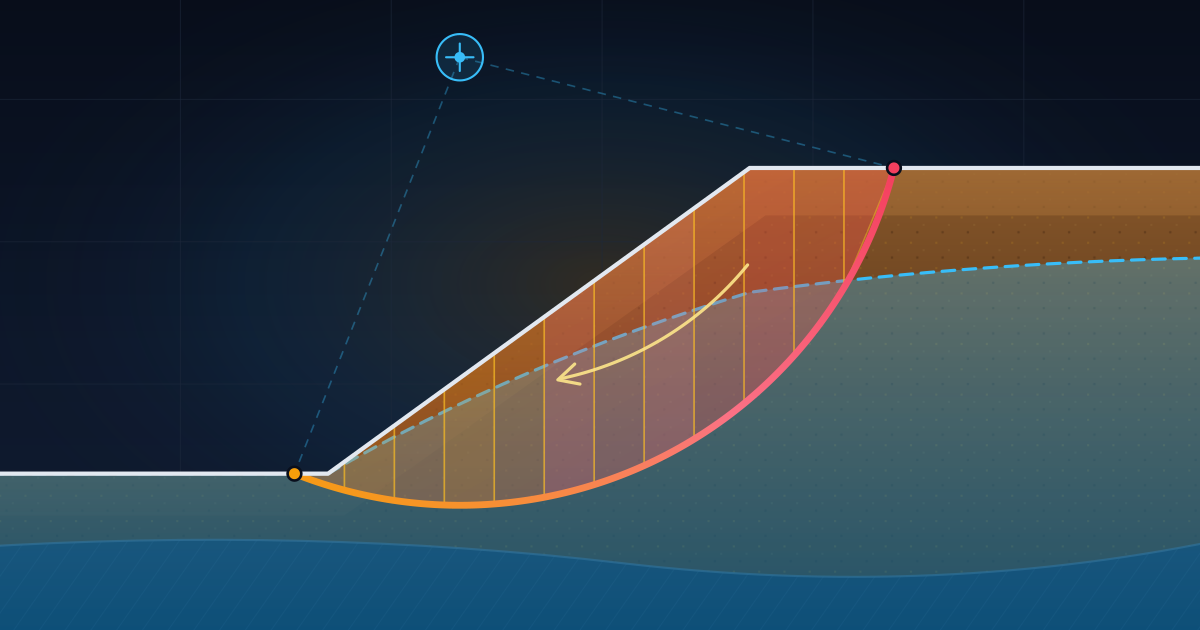
Interactive geotechnical slope stability calculator using Simplified Bishop, Fellenius, Simplified Janbu, and Infinite Slope methods. Features automatic critical slip circle search, manual drag, groundwater/seismic loads, Mohr-Coulomb plots, and SI/US units.
UI
Mohr's Circle: 3D Max Principal Stress
UI
11/15/2026
Loading...
18
Simply input the components of a 3D stress tensor to instantly solve the cubic characteristic equation, determine the three principal stresses, compute the absolute maximum shear stress, and visualize the complete 3-circle Mohr's diagram with its permissible stress zone.

Review
Validating Stress Concentration App
Review
11/18/2026
Loading...
13
Validation of stress concentration app with multiple holes

Review
Validating Reinforced Concrete Beam Design
Review
11/18/2026
Loading...
11
The ZinniaScape RC beam app matches ACI 318-19 reference values within 0.1% using the zinniascape Python client, correctly modeling elastic compression steel (fs' = 273.5 MPa) and yielding a design capacity of 295.2 kN-m (74.5% utilization for Mu = 220 kN-m).
Custom
Laminate Plate Design & Repair
Custom
11/24/2026
Loading...
5
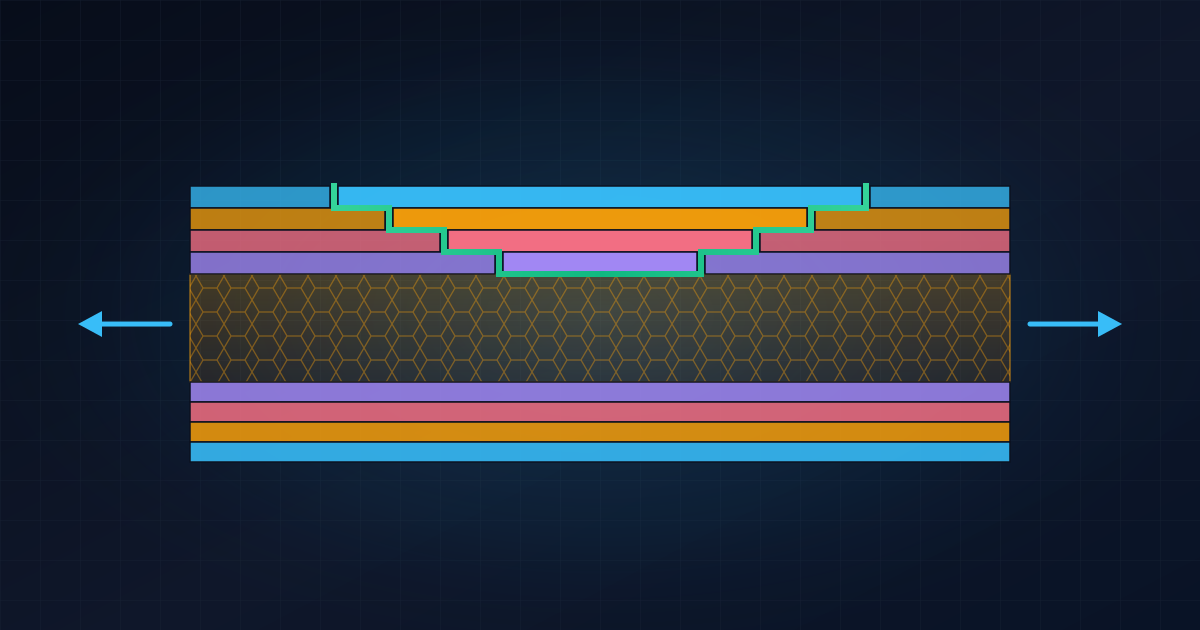
Interactive CLPT & FSDT composite laminate design, metal-equivalent stackup optimizer, and bonded repair analyzer (scarf, patch, stepped-lap). Supports sandwich cores, CSV ply/core import, SI/US units, bondline shear/peel plots, and expandable cross-section views.
You've reached the end